Architecture
What Is Clean Architecture
Explaining Clean Architecture as a dependency rule that protects business logic from framework, database, and delivery mechanism changes.
Context
Clean Architecture is useful when business rules need to survive framework changes, database changes, and delivery mechanism changes. In the project architecture, Ordering is the clearest example because its Domain and Application responsibilities should stay independent from infrastructure details.
The problem it solves is dependency drift. Without clear boundaries, controllers, ORM entities, validation, messaging, and business rules can collapse into one large code path that is difficult to test and risky to change.
Approach
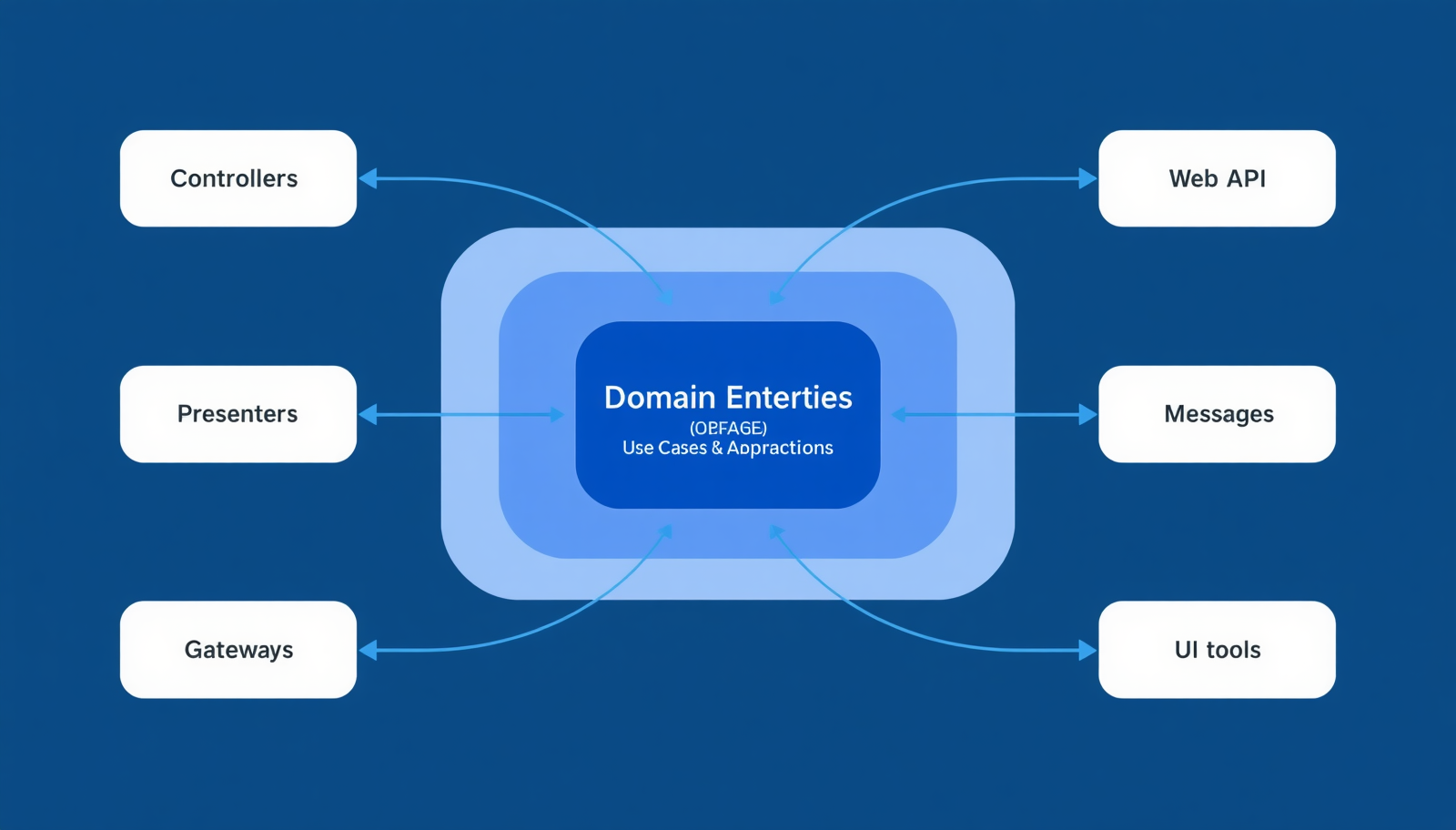
I explain Clean Architecture through the Dependency Rule: source code dependencies should point inward toward the Domain core. The Domain layer owns entities, aggregates, value objects, and business invariants, while outer layers adapt databases, APIs, message brokers, and framework concerns.
This approach is stronger than simply creating folders named Domain or Infrastructure. The real test is whether the core business logic can be understood, tested, and changed without depending on ASP.NET Core, EF Core, SQL Server, RabbitMQ, or any external SDK.
Technical points
- Keep Domain models free from Infrastructure, Web, database, and messaging references.
- Use Application use cases, commands, queries, and abstractions to coordinate workflows.
- Place concrete EF Core repositories, message publishers, and external providers in Infrastructure.
- Use MediatR and FluentValidation to keep orchestration, validation, and request handling explicit.
- Keep controllers, Minimal APIs, and gRPC endpoints as adapters that translate transport models into application requests.
- Validate domain invariants inside the Domain layer, not only at the API boundary.
Result
The result is a backend design that is easier to test, safer to refactor, and more resistant to infrastructure churn. Teams can change persistence, messaging, or API delivery details with less risk because the business rules remain isolated.
The trade-off is additional structure. Clean Architecture is strongest for long-lived systems with meaningful business rules; it can be unnecessary overhead for a simple CRUD service or short-lived prototype.
GitHub project
Review the related implementation work and project repositories on GitHub.